
Understanding Commercial Auto Coverage for Delivery Vehicles
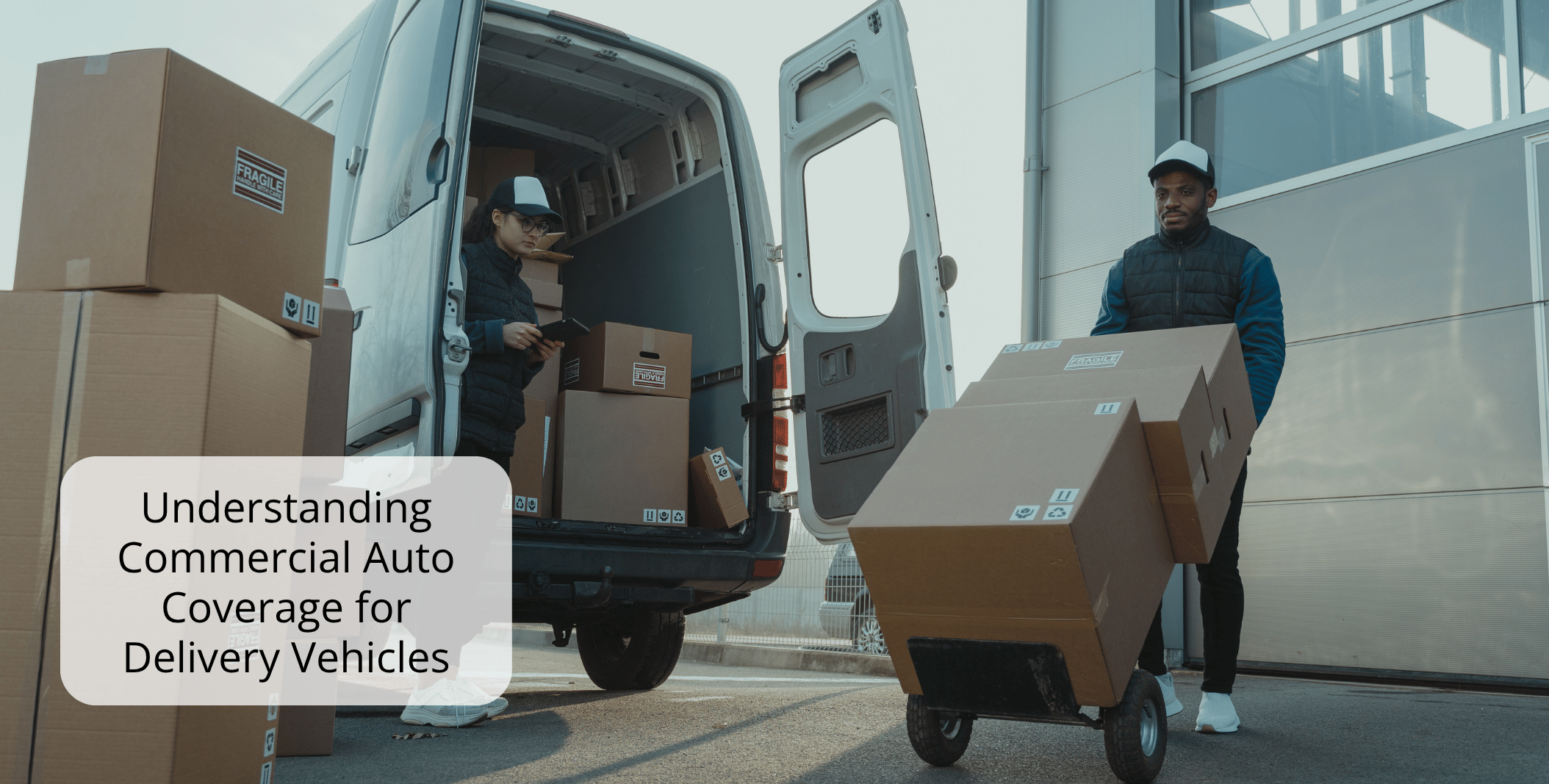
Businesses that transport goods, food, or products face distinct vehicle risks compared to standard personal driving routines. Because personal auto policies frequently contain “public or livery conveyance” or business use exclusions, businesses using vehicles for delivery operations often evaluate commercial auto coverage to address potential liability and property exposures.
Commercial auto policies can be structured to include several core components depending on how a vehicle is operated:
| Coverage Type | Primary Risk Addressed | Key Considerations |
| Standard Commercial Auto | Vehicles owned or leased directly by the business | Applies business-use rating and higher liability limit options |
| Hired & Non-Owned (HNOA) | Personal vehicles driven by employees for business errands | Typically addresses liability claims against the business, rather than physical damage to an employee’s vehicle |
| Cargo / Inland Marine | Goods, tools, or products transported inside the vehicle | Standard auto policies generally exclude damage to or theft of transported inventory |
When reviewing delivery vehicle coverage, several policy conditions are typically evaluated:
Because delivery frequency, vehicle ownership, and cargo types vary across businesses, exploring policy options helps clarify how protection applies. An independent insurance professional can help explain policy forms, discuss available endorsements, and provide information to assist in reviewing a company’s commercial auto strategy. Final coverage decisions remain the responsibility of the insured.
Disclaimer: The information provided in this article is for educational purposes only and does not constitute a legal contract or policy. Coverage options, limits, endorsements, and exclusions vary by state, insurance carrier, and individual policy terms. All claims are subject to the terms and conditions of the active policy. It is recommended to consult with a qualified insurance professional to review your specific commercial vehicle situation.